
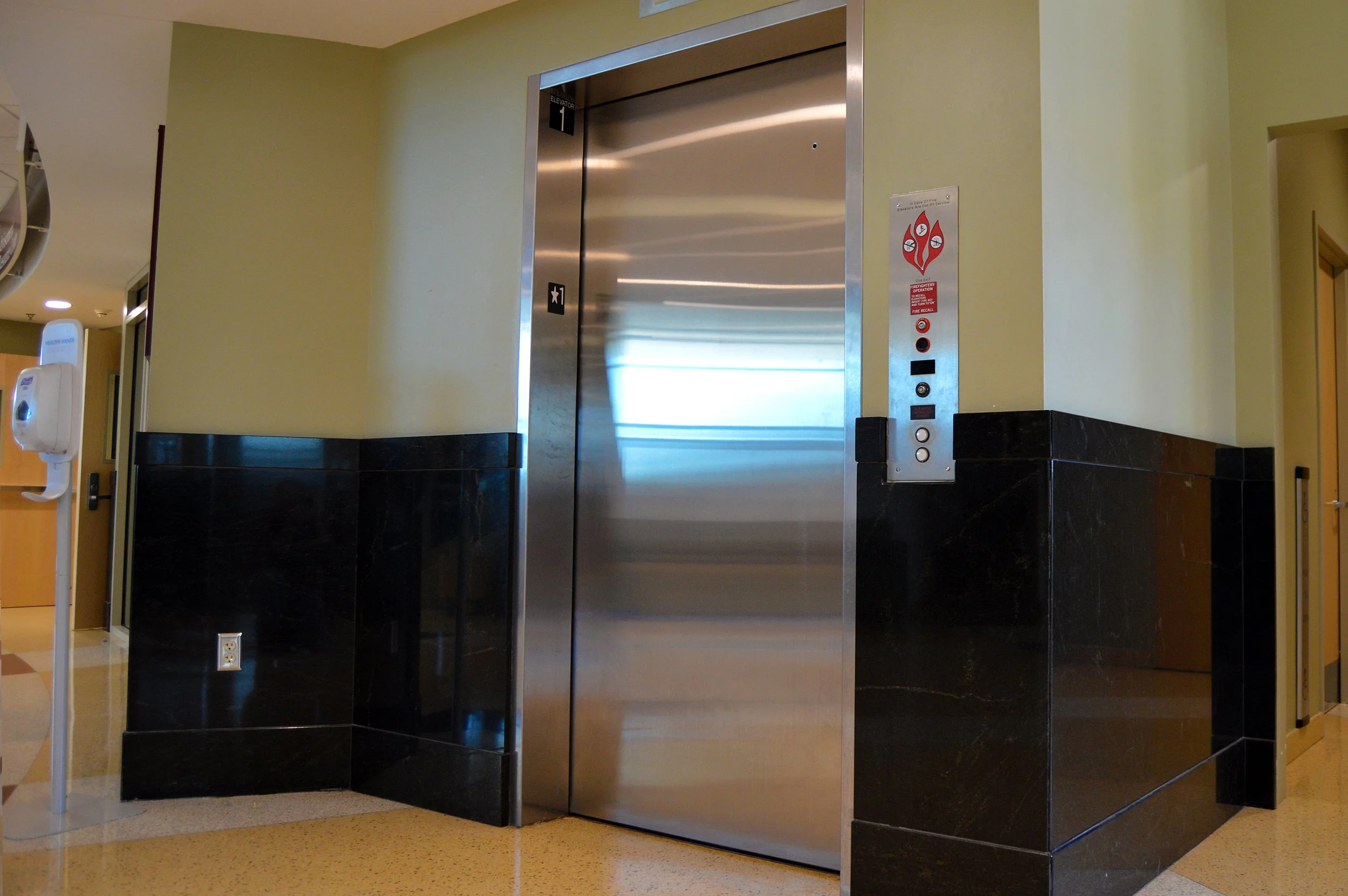
A low-rise elevator does not need to be launched like a rocket. A smooth ride is more important than speed.
In today’s world, speed is everything. Faster cars, faster computers, faster internet—everyone seems to want more speed. But when it comes to elevators, faster is not always better.
At Georgia Lift Solutions, we often help building owners, developers, and property managers understand one important truth: the right elevator speed depends on the building, not the desire for “more.”
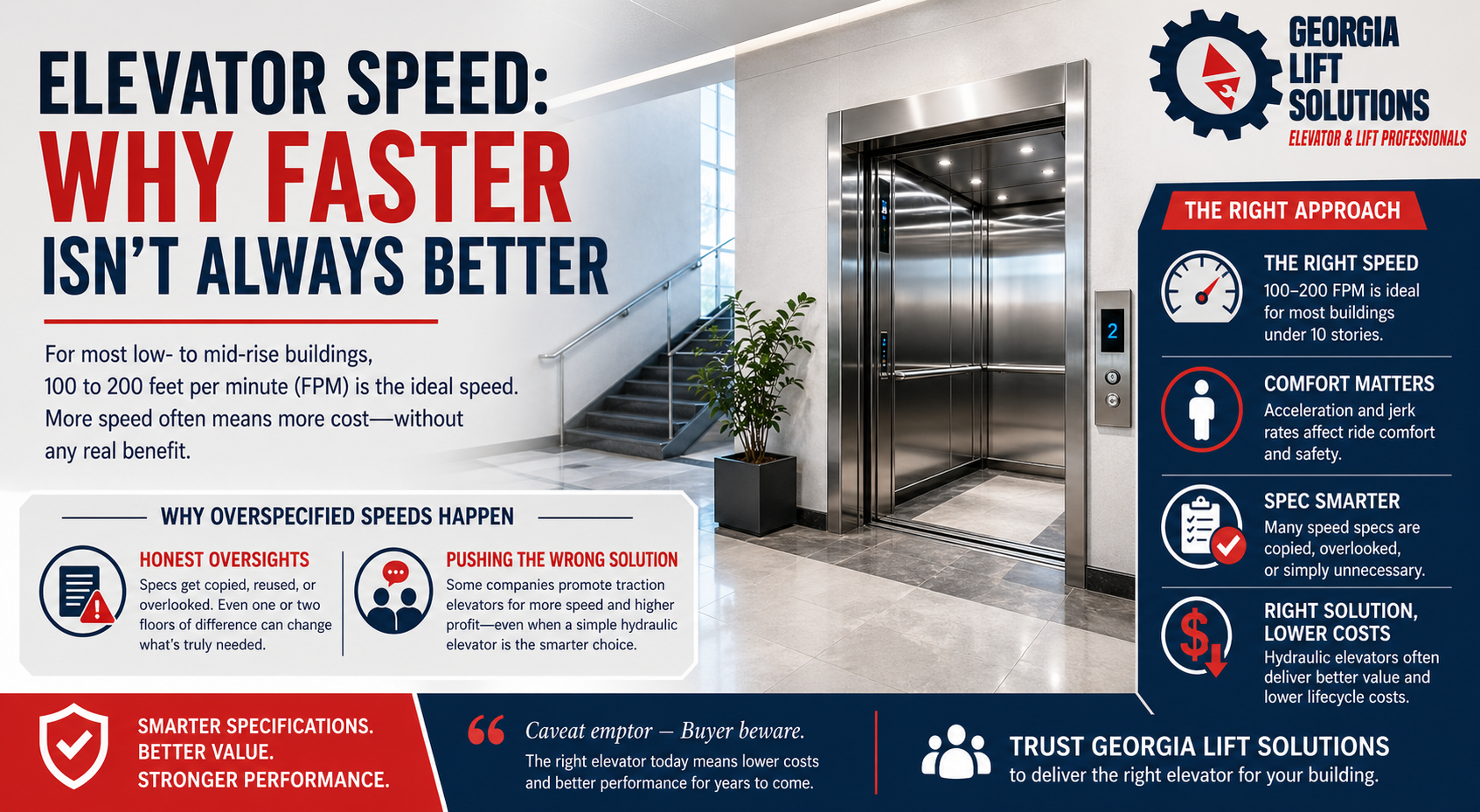
For most low- to mid-rise buildings, especially those under 10 stories, a travel speed between 100 and 200 feet per minute (FPM) is not only sufficient—it’s the ideal solution.
Why Most Buildings Don’t Need Faster Elevators
Many people assume that a faster elevator means better performance. In reality, most hydraulic elevators in low-rise buildings will never even reach higher advertised speeds.
Why?
Because elevators don’t launch like rockets.
They must accelerate smoothly, travel comfortably, and stop safely within relatively short distances. In buildings with only two to ten floors, there simply isn’t enough travel distance for an elevator to accelerate to extremely high speeds before it needs to slow down again.
That means specifying 300, 400, or even 500 FPM for a short-rise building often creates unnecessary cost without delivering any real benefit.
Comfort Matters: Acceleration and Jerk
Two major factors determine how an elevator feels to passengers:
Acceleration
This is how quickly the elevator reaches its top speed.
Jerk Rate
This refers to how quickly acceleration changes—essentially how smooth or abrupt the ride feels.
These are major human comfort considerations. If acceleration or jerk is too aggressive, passengers feel it immediately—and not in a good way.
Find an elevator company that has experience and is will to listen to your needs.
Contact: Georgia Lift Solutions
Too much force can make riders feel unstable, uncomfortable, or like they’re starring in a cartoon where the elevator drops out from under them.
Industry practical limits typically stay around:
4 ft/sec² for acceleration
8 ft/sec³ for jerk
These limits exist for a reason: passenger comfort and safety.
At Georgia Lift Solutions, we prioritize ride quality just as much as performance.
Why Overspecified Elevator Speeds Happen
So if this is common knowledge in the elevator industry, why are some two- and three-story buildings still being quoted with unrealistic speeds?
Usually, it comes down to two reasons: honest mistakes and product-driven recommendations.
Honest Oversights in Specifications
Construction specification sheets are massive documents packed with technical details. Elevator systems are often just one small part of a much larger project.
Because of that, elevator specifications are frequently:
copied from previous projects
reused from similar buildings
inserted without full review
overlooked during final revisions
Even one or two floors of difference can dramatically change what the proper elevator speed should be.
At Georgia Lift Solutions, we regularly review project specs and identify when speed requirements don’t align with the actual building. Often, a quick clarification call resolves the issue.
When Bigger Companies Push the Wrong Solution
Sometimes, however, the issue goes deeper.
Large elevator manufacturers may use the quoting process to promote specific products—particularly traction elevators over hydraulic systems.
While traction elevators absolutely have their place, they are often unnecessary for smaller low-rise buildings.
In many two- to three-story applications, a hydraulic elevator with 150 FPM travel speed is the smarter choice.
Why?
Because it offers:
lower upfront installation costs
simpler design requirements
reliable long-term performance
significantly lower maintenance costs
Traction elevators can cost two to three times more to maintain over their lifecycle, creating long-term expenses that many owners were never warned about.
Unfortunately, some building owners are sold on “more speed” when what they really need is the right solution.
Hydraulic vs. Traction: Choosing What Makes Sense
At Georgia Lift Solutions, we believe elevator recommendations should be based on what works best for your building—not what generates the most future service revenue.
For many low-rise commercial properties, schools, churches, offices, and municipal buildings, hydraulic elevators remain the best long-term investment.
They are dependable, cost-effective, and designed for exactly the type of service these buildings require.
More speed does not always mean better value.
Buyer Beware
The old Latin phrase still applies today:
Caveat emptor — Buyer beware.
When it comes to elevator systems, understanding the difference between necessary performance and unnecessary upgrades can save building owners tens of thousands of dollars over the life of the equipment.
At Georgia Lift Solutions, our job is to help clients make informed decisions—not expensive mistakes.
If you're planning a new elevator project, modernization, or replacement, we’re here to help you choose the right system for your building, your budget, and your long-term success.
Because sometimes, slower is actually smarter.
