
The cost of a complete pit to roof-top machine room makeover can easily run in the tens of thousands or even hundreds of thousands of dollars, depending on the total travel distance, type of elevator, and work to be done. But writing the check is just the tip of the iceberg.
Why? Because modernization comes with a myriad of problems. As the building owner or manager, you have to make all sorts of decisions and accommodations, coordinating the intricate dance of building tenants with elevator personnel. Some need to get in and out and others up and down. Schedules have to be merged, communications opened, storage areas coordinated, parking and unloading allowed, inconveniences avoided, and ruffled feelings assuaged. Patience is the watchword, as modernization work can drag on from a couple months to sometimes over a year. In that time span, patience can wear as thin as crepe paper. Then the anger and hate sinks in as reasonable people become less so.
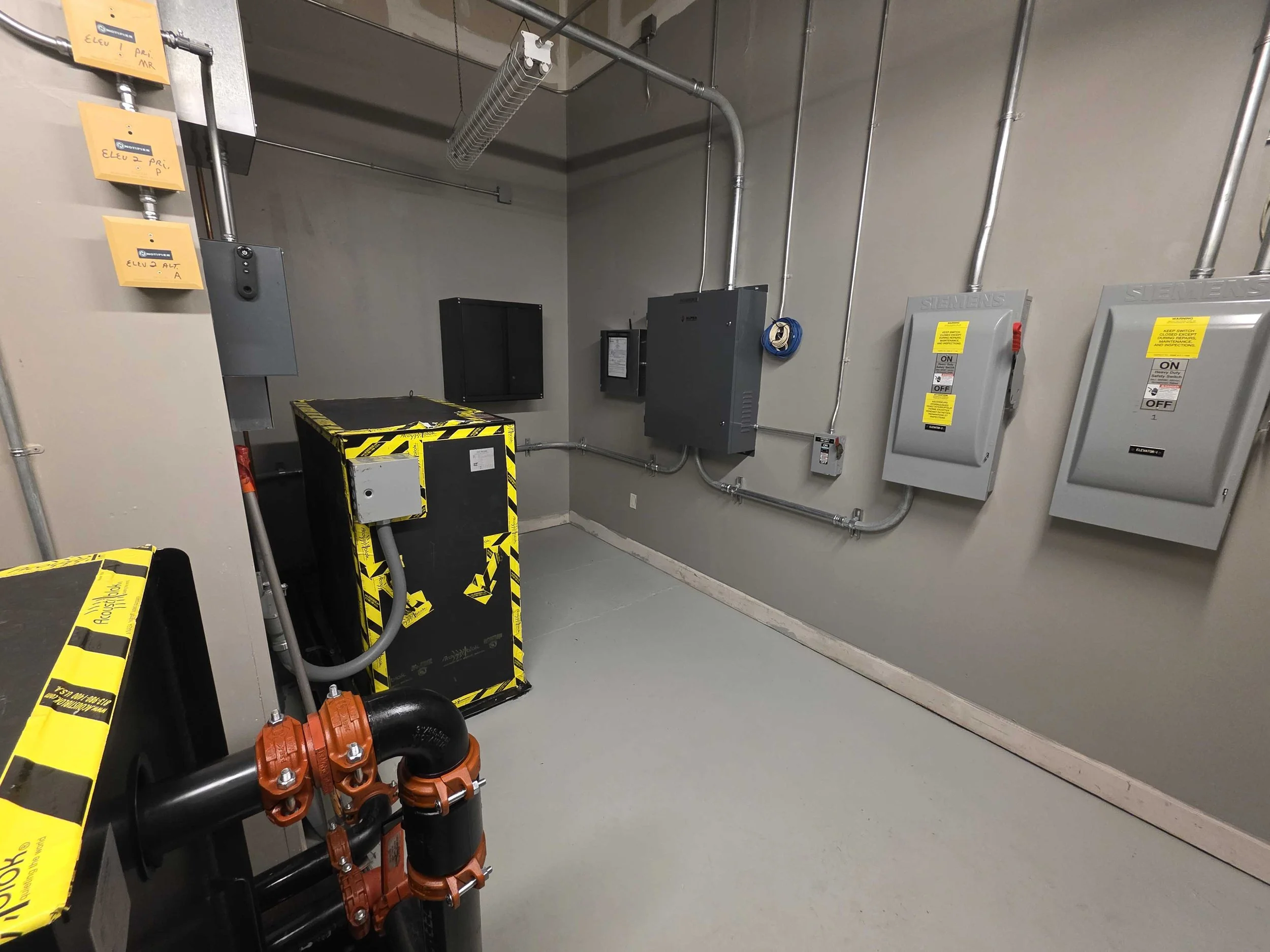
An elevator modernization can include a mechanical update as well as cleaning and improving the machine room layout.
It is best to snuff out the reason for the anger before you get hip deep in the project. This involves a proactive communication plan that can keep you and your client from a point of burning rage. Two lines of communication need to be opened, maintained, and nurtured: first to the tenant and then to your team including the client or building owner.
Communicating with Your Tenants
For managers and building owners across Georgia, it is important not to forget the tenant. These are the people that the elevator folks seem to forget to the point of being considered a near nuisance. The elevator techs feel that the tenants want in or out of the building in the middle of a crucial aspect of the elevator work, or that they interrupt the work with questions and complaints. However, it is important to remember that they, the tenants, are in essence paying for the modernization, as their rent is where the funds come from. But too often, their concerns are ignored or given the back seat. In both apartment buildings and office complexes throughout Atlanta, Savannah, Augusta, and beyond, reliance on the elevator is the reality for the people who use and pay rent in the building.
Keep in mind that early on, for a day or so, hoofing it up a flight or two doesn't seem all that inconvenient—especially during Georgia's mild spring and fall weather. But a week and a couple bunions later, particularly during our hot, humid summers, you'll see the best of tenants question the need for the new elevator equipment and wonder why it is taking so long. Be aware of this and go the extra mile in communication and convenience. Part of that is being ready and willing to discuss the following in an open and forthright manner if you are the building manager or owner:
Why the update is needed. Is it safety? To bring the elevator up to Georgia code? Both? More? Be ready to explain everything, warts and all, pluses and negatives.
The timeline agreed to. Nothing is worse than mentally preparing yourself for a big inconvenience and then having it drag on for weeks past the promised deadline. Give updates often.
The noise. Let the tenants know that working on an elevator can be loud. There is sometimes drilling and hammering involved and heavy equipment being moved.
Dust, dirt, and grime. Let the tenants know that, although every effort will be made to contain the mess, some will sneak through. It is a work area.
Tenants' needs. Ask how you can help your tenants out or if they have a significant need on the horizon. Sometimes it is nothing more than hiring some strong backs to do extra lifting or getting a hand truck.
Safety. Remind your tenants to follow directions and signs that warn of dangers.
Working with Your Team
There is a similar list for dealing with the elevator contractor and ownership or manager team. A reputable and experienced elevator company will be able to provide the team the following information:
An honest timeline in writing. A day or two leeway is nice and forgivable, but beyond that and you should have a direct conversation. If the contractor is off the target more than a couple days, they either don't know what they are doing, didn't do a good job with the site survey, or didn't follow the Modernization Checklist produced by NAEC. The bottom line is that if they are weeks off, it is not your fault but theirs. Let them know about it and find a solution.
A list of your responsibilities. As partners in this effort responsibilities should be clear and contained in the contract. Highlight them and make sure you are not the problem. If you promised the contractor after-hours access, then you must provide for that. If you promised them onsite storage, then you must give it to them. Don't get in the way of the job finishing on time.
Special concerns or needs in writing. Memories are short, so don't rely on yours. Both parties need to understand that no contract is carved in stone. Add things before they become a problem or misunderstanding. Make sure everyone is clear on compensation and to see to it that the concerns are addressed early.
From the owner’s perspective compare contracts. Let's just say that you need to keep everyone honest. Sometimes they all come in close, but watch out if one is really low. They could be missing something big. Check what they are going to do in comparison to what the other companies are offering in writing—avoid nebulous wording and broad statements.
Owner’s Check References. No, really, check references.
Non-proprietary parts. Non-proprietary simply means that anyone can work on the unit. This may not seem real important until the company that put in proprietary parts tries to raise the maintenance agreement. Proprietary parts keep you locked in to an unfair, one-way maintenance agreement with the installer. Don't budge on this point; non-proprietary parts will cost you more in fees and maintenance over the life of the unit than the cost of the unit itself overall.
Moving Forward
I know these pointers cannot fully extinguish the angst of dealing with a modernization, but I certainly hope it helps. Whether we like it or not, every elevator will need updating at some point. So take your time, consider how you can help, all involved from tenants to the owner, manager and elevator contractor.
If you're a building owner or manager in Georgia and want a quote on elevator modernization, contact Georgia Lift Solutions today. Our experienced team understands the unique challenges of modernization projects across the state and is committed to clear communication, realistic timelines, and quality workmanship that keeps both you and your tenants satisfied.
