
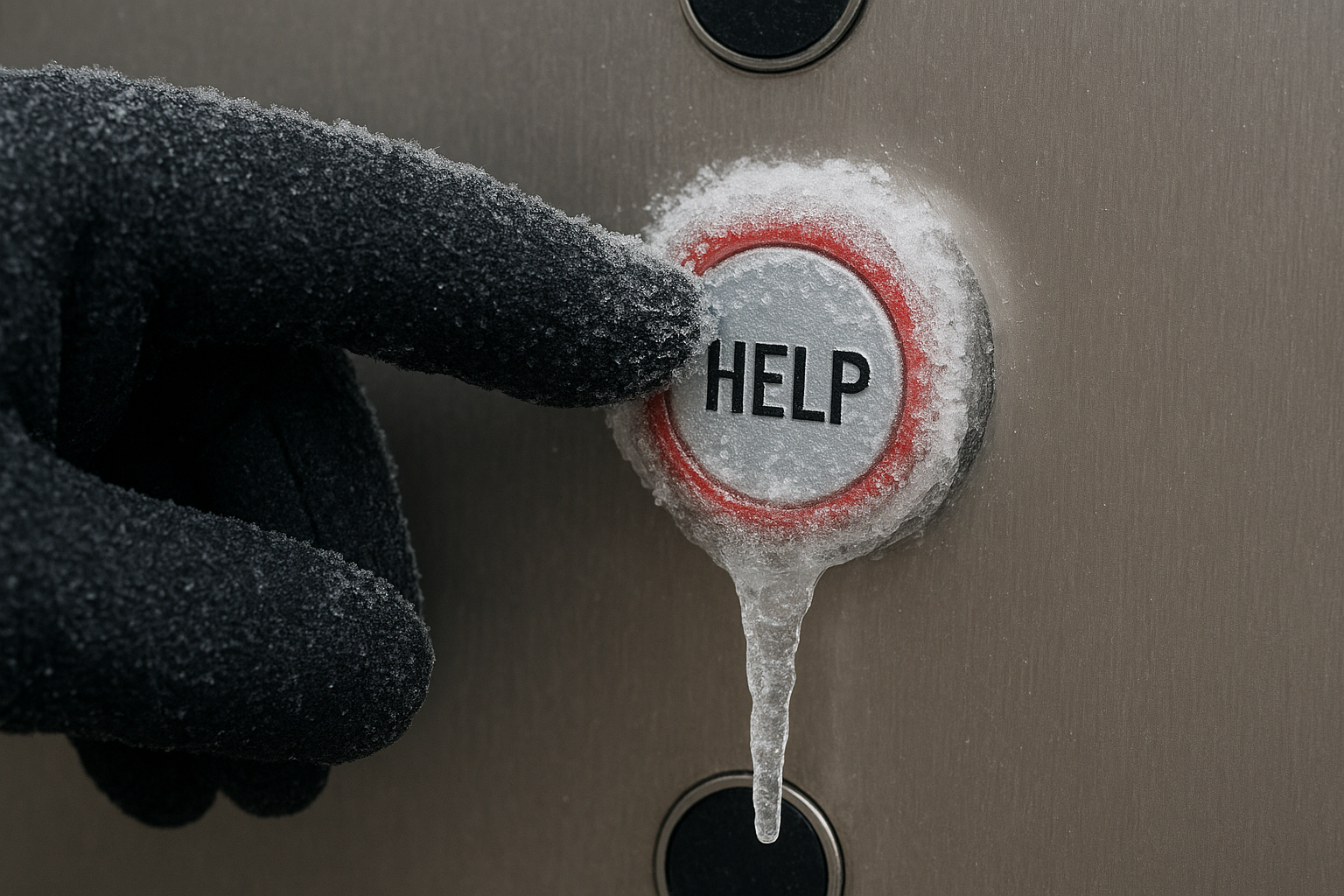
We are getting into the winter months and cold wet weather can hurt your elevator’s operation and function. Although in our region it is rare for there to be snow, it is a good idea to think about the largest moving object in your building and the weather. What are precautions you can take to make sure your elevator continues to function like a champ?
It all begins with the most important thing you can do to ensure that your elevator will function as intended…routine preventative maintenance. It’s the absolute best way to ensure your elevator will give you great service month in and month out all year long. But this is especially true when the weather turns cold and dreary. Routine inspections by a qualified and licensed elevator technician will catch problems that can cause shutdowns before they happen. Unfortunately, many contracts that once specified monthly checkups no longer exist. With the wrong company the friendly elevator technician seems to visit less and less, unless there is an emergency. So first things first, check your current contract and see if you are owed a visit. If so, schedule one pronto! While the technician shows up it would be a good idea to go over the items listed below and also discover what they will be checking out. You should make every effort to look into these with your service provider before the wet, wintry weather gets too bad:
→ Hydraulic oil temps – A drop in temps can do more than give you a chill. Temperature fluctuations can create issues with the hydraulic fluid that makes your elevator run. Optimally, the operating range for the hydraulic fluid is between 95 to 105 degrees Fahrenheit. Acceptable temperatures, but not optimal can range between 80–95°F on the low side and 105-140°F on the high side. Especially in cold weather if the temp drops below the target, it can cause the hydraulic fluid to get thicker resulting in slow starts, poor leveling, a noisy pump, and relief valve chatter. If you have no heat in the machine room, your equipment is in a garage or on a roof with windy weather, you may need to see about getting a tank heater or insulating the machine room and getting some heat. Poor leveling is sign to watch out for.
→ We have all been in an elevator when we have heard a ghastly moan. Not only is it frightening but also a sign there maybe a mechanical problem and not just a haunting. The sound could be caused by cold weather. The grease or lubricant on the rails may be dry or sticky. You have probably heard the term “Slower than molasses in the winter.” Your lubricant can be the same. You may need to check with the maintenance provider if you are hearing odd, creaking noises from the hoistway. They can grease the skids, so to say.
→ If your elevator car is just too cold in the winter, you may have the elevator parked on a cold floor. Many elevators have exterior access and sometimes the car is inadvertently parked at those floors when idle. In other words, with most modern technology when there is a lull in traffic an elevator car can be told where to wait. Be sure to not have your car automatically parked at exterior hoistway openings or parking garage entrances. If you want a cozier ride, have the car park on a floor with heat and air.
→ The emergency lowering function on your elevator also needs to be checked out. The battery lowering or battery backup system is what brings you to a safe floor if there is a loss in power. Elevators are programmed to automatically move to the lowest or main floor for egress when the power goes out. Winter can bring with it all sorts of inclement weather such as hurricanes, ice storms or thunderstorms so the backup system is needed. So, now is the time to make sure the system is working at a high, safe level. No one wants to get stuck in an elevator.
→ Check the sump pump – Most elevators have a pump in the bottom of the pit. The purpose, of course, is to keep water from building up in the elevator pit and creating a foul odor or even damaging the equipment that resides at the bottom of the shaft. It turns out, having standing water is a bad thing, and if the sump pump is broken, turned off or unplugged, that standing water can build causing mold, a stench, or even mechanical problems. As a preventative make sure your tech checks the pump.
→ Lastly, elevator door sills need to be vacuumed out. When its cold and rainy all sorts of pebbles, mud, and gunk get stuck in boots and shoes. Also, sometimes folks just don’t wipe their feet when they are in a rush to get in the door and out of the weather. The smallest pebble can get caught in the grooved plate in the floor of the entrance to your elevator and cause the door to jam or not flow freely.
If you are a building owner or manager, it is a good idea to take care of getting these specific items looked at as soon as possible. Due to the reduction of the occurrence of monthly maintenance and most companies only providing maintenance when they want to, it may take a prompting phone call. It is much better to deal with scheduling the visit now than when someone gets stuck or the elevator stops working. Remember, cold weather can cause all sorts of problems, both immediate or over a long period of time. Be proactive so your elevator can give you years of reliable service.
Georgia Lift Solutions provides maintenance agreements to give your elevator the tender loving care it needs and deserves. If you are having trouble with your current service provider and your contract is up, just contact us for information about how we can help. We are also available for emergency services.
