10 Signs It's Time to Consider an Elevator Modernization
If your building's elevator has been in service for decades, you've probably asked yourself: Should we keep repairing it, or is it time for a full modernization?
It's a common question among building owners across Georgia. While routine maintenance and occasional repairs are expected, there comes a point when continuing to fix an aging elevator becomes more expensive—and less reliable—than upgrading it.
At Georgia Lift Solutions, we help building owners make informed decisions based on the condition of their equipment, their budget, and the long-term needs of their facility. Here are ten signs that your elevator may be ready for modernization.
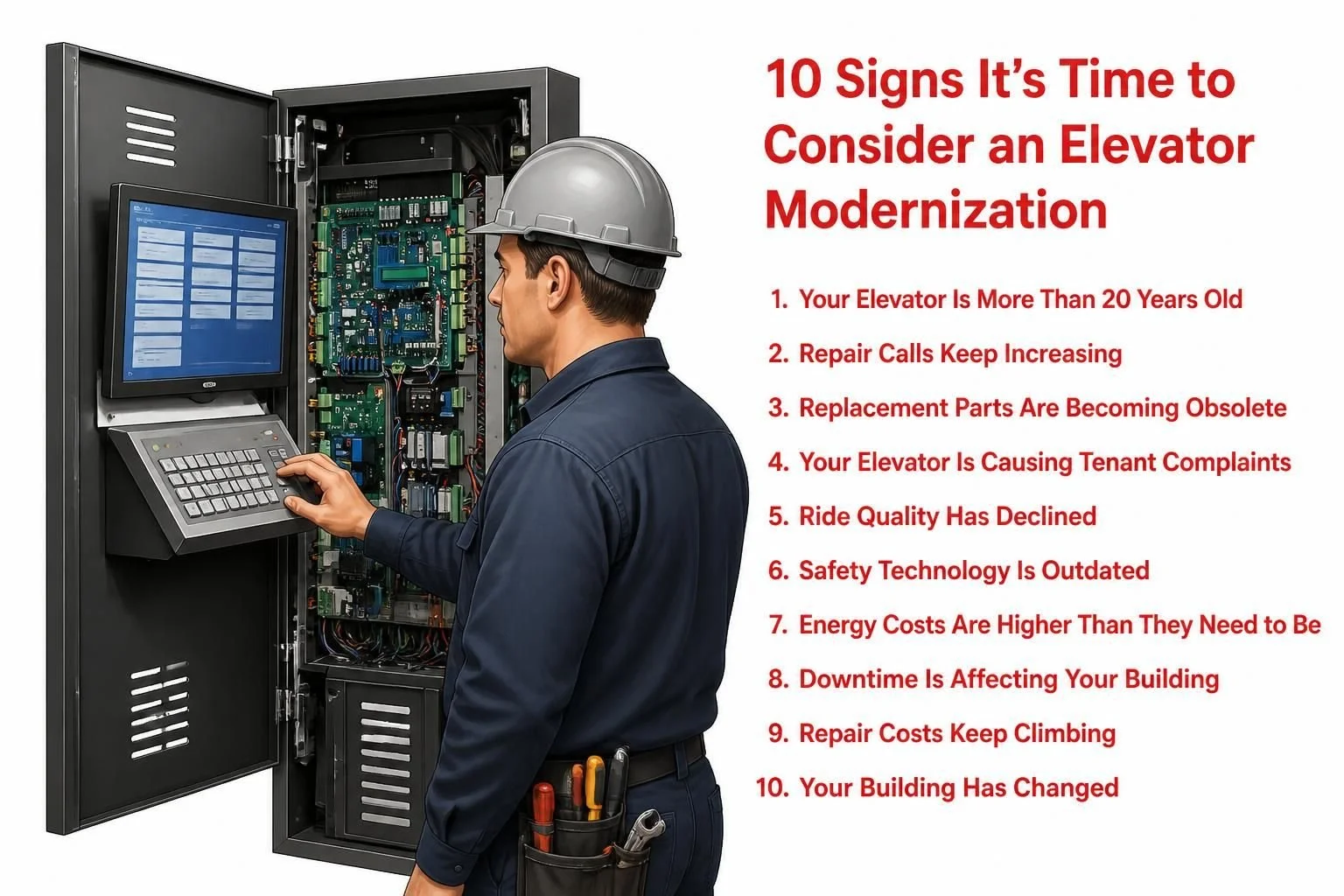
1. Your Elevator Is More Than 20 Years Old
Most commercial elevators are designed to provide decades of reliable service, but major components begin to wear with age. Controllers, motors, hydraulic systems, door operators, and electrical components all have a finite lifespan.
Even if your elevator still runs, aging equipment is more likely to experience unexpected failures.
2. Repair Calls Keep Increasing
An occasional repair is normal. However, if your maintenance company seems to be visiting every few weeks, your elevator may be telling you something.
Common warning signs include:
Frequent shutdowns
Door malfunctions
Random fault codes
Intermittent operation
Emergency service calls
When repairs become routine instead of occasional, modernization often becomes the more economical solution.
3. Replacement Parts Are Becoming Obsolete
Many elevators installed in the 1980s, 1990s, and early 2000s use controllers and electronic components that manufacturers no longer produce.
As parts become harder to find, repairs can involve:
Longer downtime
Higher repair costs
Refurbished or used replacement parts
Increased risk of future failures
Modern equipment eliminates many of these concerns by using current, readily available components.
4. Your Elevator Is Causing Tenant Complaints
Your elevator is often the first and last impression people have of your building.
If tenants, visitors, employees, or residents regularly complain about slow operation, rough rides, noisy equipment, or frequent outages, it's time to evaluate whether repairs are truly solving the problem.
Reliable vertical transportation is essential for office buildings, apartment complexes, churches, schools, healthcare facilities, and hotels.
5. Ride Quality Has Declined
A healthy elevator should provide a smooth, quiet ride.
If your elevator:
Starts or stops abruptly
Levels unevenly at landings
Vibrates excessively
Makes unusual noises
Has inconsistent door operation
these are often signs that major components are nearing the end of their service life.
6. Safety Technology Is Outdated
Elevator technology has improved significantly over the past two decades.
Modernization can provide updated equipment that offers improved reliability and enhanced safety features, including:
Advanced door protection
Improved emergency communications
Modern electronic controllers
More dependable braking systems
Better compliance with current codes and industry standards
While older elevators can often remain code-compliant with proper maintenance, modernization brings many of the performance and safety advantages of today's technology.
7. Energy Costs Are Higher
Older elevator systems are generally less energy efficient than today's equipment.
Modern systems often include:
High-efficiency motors
LED cab lighting
Variable frequency drives
Intelligent sleep modes
Lower overall power consumption
Over time, these improvements can reduce operating costs while improving performance.
8. Downtime Is Affecting Your Building
An elevator that's frequently out of service doesn't just inconvenience passengers—it affects your entire operation.
Extended downtime can lead to:
Frustrated tenants
Accessibility challenges
Lost productivity
Increased emergency repair costs
Damage to your building's reputation
If outages are becoming disruptive, modernization may provide the reliability your building needs.
9. Repair Costs Keep Climbing
Take a look at your maintenance and repair invoices from the last several years.
If you're spending thousands of dollars annually just to keep an aging elevator operational, it's worth comparing those costs to the investment in modernization.
Many owners discover that upgrading their equipment provides greater long-term value than continuing to repair obsolete systems.
10. Your Building Has Changed
Buildings evolve over time.
Perhaps occupancy has increased, accessibility requirements have changed, or traffic patterns are heavier than when the elevator was originally installed.
Modernization can improve:
Reliability
Ride comfort
Performance
Door operation
Overall passenger experience
An upgraded elevator helps ensure your building continues to meet the needs of its occupants for years to come.
Modernization Doesn't Always Mean Starting Over
One common misconception is that modernization requires replacing the entire elevator.
In many cases, modernization can be completed in phases. Components such as the controller, door equipment, machine, fixtures, or cab interior can often be upgraded over time, allowing owners to spread costs across multiple budget cycles while significantly improving reliability.
Let Georgia Lift Solutions Help You Make the Right Decision
Every elevator is different. Some systems need only a few strategic upgrades, while others have reached the point where a complete modernization provides the greatest long-term value.
At Georgia Lift Solutions, we'll evaluate your elevator, explain the condition of your equipment, identify any obsolete components, and help you determine whether continued repairs or modernization is the smartest investment for your building.
Our goal isn't to sell you equipment you don't need—it's to provide honest recommendations that improve safety, reliability, and long-term performance while helping you maximize your maintenance dollars.
If your elevator has become unreliable, expensive to maintain, or difficult to repair, contact Georgia Lift Solutions today for a professional modernization evaluation.
