
In Georgia, the building owner (or in some cases the lessee or permit holder) has the primary legal responsibility for keeping an elevator safe and code-compliant. These responsibilities are established in Georgia law and the rules enforced by the Office of the Insurance and Safety Fire Commissioner. What follows is a list of just some of the specific things you are required to do. It can seem overwhelming but Georgia Lift Solutions can help.
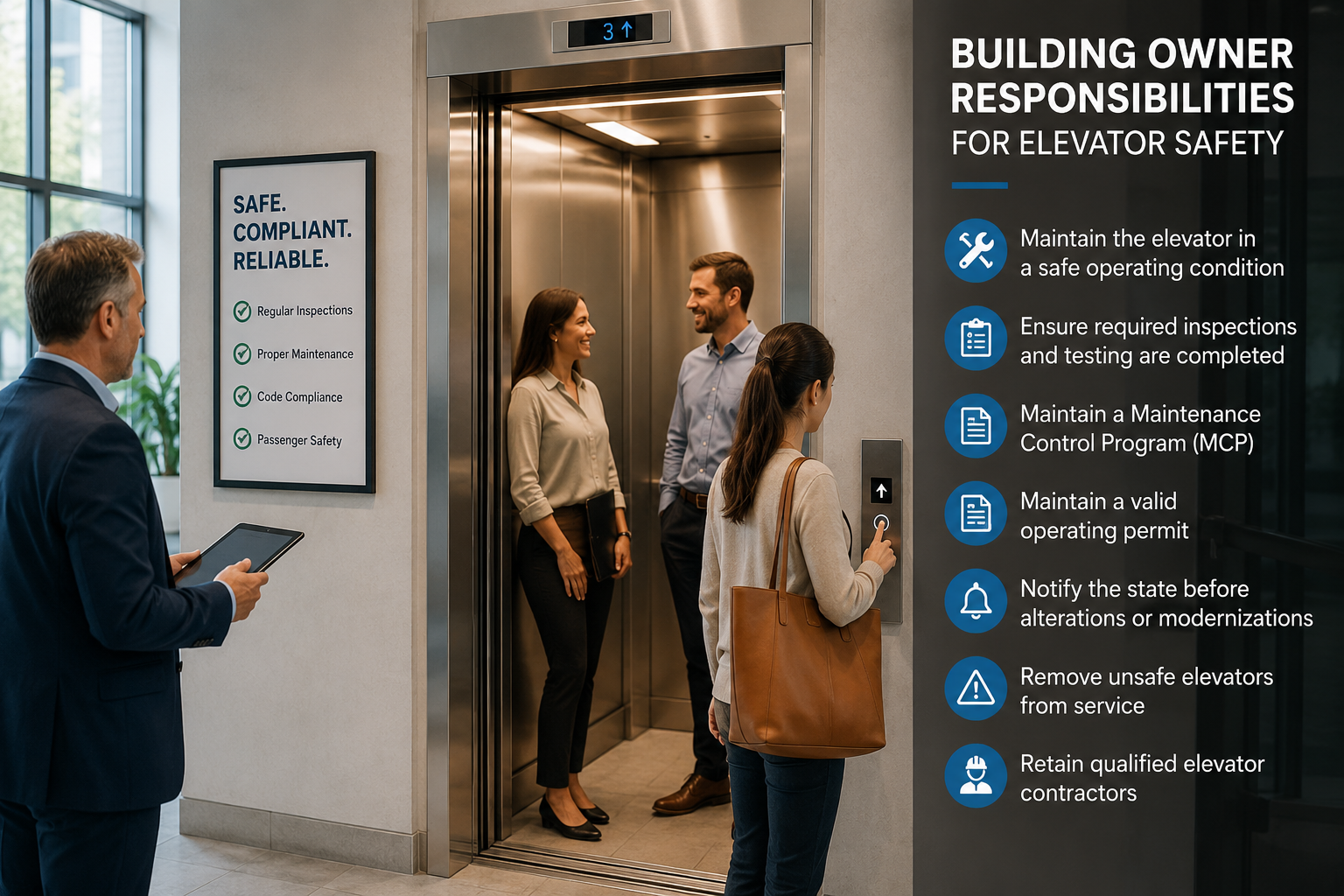
The primary responsibilities include:
1. Maintain the elevator in a safe operating condition
This is the owner's most important duty. Georgia law requires every elevator to be maintained in a safe operating condition and in accordance with the adopted elevator code (primarily ASME A17.1).
This generally means:
Keeping the elevator in good working order.
Promptly repairing known defects.
Ensuring all safety devices function properly.
Using qualified elevator personnel for maintenance and repairs.
2. Ensure required inspections and testing are completed
The operating permit holder is responsible for ensuring all code-required inspections and tests are performed, including:
Annual inspections
Category 1 tests
Five-year Category 5 tests (for traction and hydraulic elevators)
The state or authorized inspectors perform inspections, but the owner is responsible for making sure they occur.
3. Maintain a Maintenance Control Program (MCP)
Georgia requires owners to maintain records required by the Maintenance Control Program.
These records must include:
Maintenance performed
Inspections
Repairs
Required testing
Record retention requirements include:
3 years for routine maintenance records.
5 years for five-year test records.
Electronic records are permitted, but printed copies must also be available on site.
4. Maintain a valid operating permit
Commercial elevators generally must have:
A current operating permit.
Required inspections completed before permits are renewed.
Operating an elevator without the required permit can lead to enforcement action.
5. Notify the state before alterations
Before making significant alterations or modernizations, the owner must notify the enforcement authority. The elevator may require inspection before being returned to service.
6. Remove unsafe elevators from service
If an elevator presents an unsafe condition, the owner should remove it from service until repairs are completed. Continuing to operate a known unsafe elevator can expose the owner to regulatory penalties and civil liability.
7. Retain qualified elevator contractors
Georgia requires companies that install, maintain, or repair elevators to be properly licensed/certified by the state. Owners should use qualified contractors for maintenance and repairs.
Practical responsibilities for a commercial building owner
A prudent building owner should:
Have a maintenance contract with a licensed elevator company.
Schedule and complete all required inspections and tests.
Keep maintenance and testing records on site.
Address reported problems immediately.
Take elevators out of service when safety is questionable.
Keep operating permits current.
Ensure emergency communication devices function properly.
Liability
If someone is injured because an owner failed to:
maintain the elevator,
correct known hazards,
perform required testing,
or comply with Georgia code,
the owner may face:
State enforcement actions,
Civil lawsuits for negligence,
Increased insurance exposure,
Potential punitive damages if there was reckless disregard for safety.
Georgia Lift Solutions Can Help
Georgia places the ultimate responsibility on the owner (or operating permit holder) for the elevator's safe operation—even if maintenance is contracted to an elevator service company. So be wise in who you hire! Georgia Lift Solution is licensed, experienced, and ready to help you to make your ownership as easy as possible. Contact us for a free consultation.
