
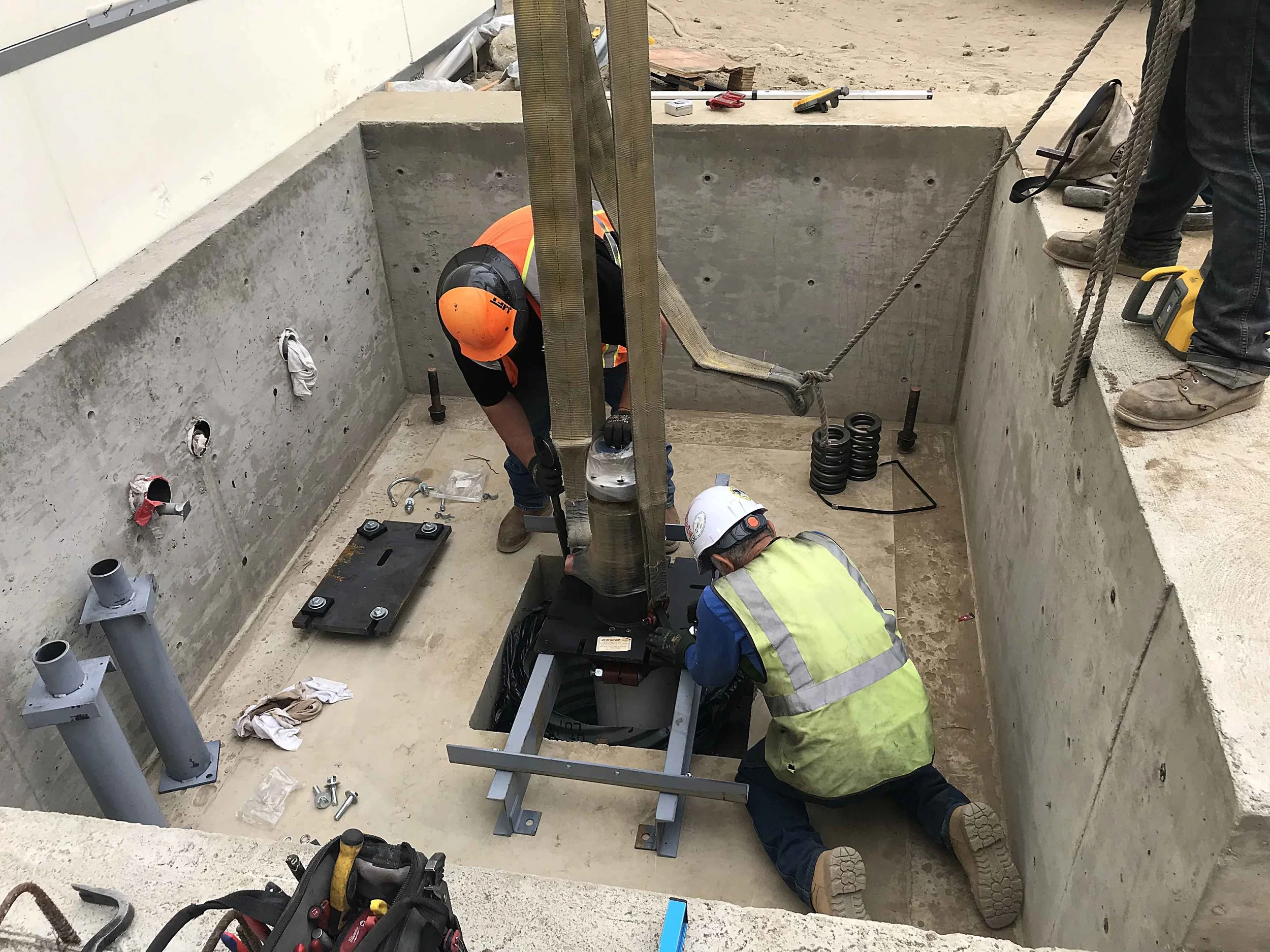
When it comes to many elevator applications—especially in buildings between two and five stories—hydraulic elevator jacks play a critical role in moving the elevator car smoothly and reliably. In fact, nearly 70% of elevators installed today are hydraulic, and every one of them depends on a jack to do the heavy lifting.
An elevator jack is the final and most important component in a hydraulic system that includes fluid, tanks, motors, and pumps. Because the jack is responsible for physically raising the elevator car, understanding how it works—and which type is best for your building—is essential if you’re planning a new installation or considering a modernization project.
Depending on your building layout, travel distance, and available space, there are several jack options to choose from. Below, we’ll break down the most common types of elevator jacks, along with their advantages and tradeoffs, so you can make an informed decision.
Single-Stage Holeless Jacks
In many construction projects, drilling a hole beneath the elevator pit is either impossible or cost-prohibitive. That’s where holeless elevator jacks come into play. The most common option for shorter travel distances is the single-stage holeless jack.
A single-stage jack uses one piston that moves up and down without telescoping. These jacks are commonly installed in pairs—often referred to as twin jacks—mounted on either side of the elevator car. They are suitable for both passenger and freight elevators.
Advantages
Lightweight and easier to install
Typically the most economical option
Capable of supporting very heavy loads
Considerations
Two jacks mean more adjustments and slightly higher maintenance
Requires additional overhead space in the hoistway since the jacks do not retract into the pit
You can have above ground telescopic jacks as well (see below).
Single-Stage In-Ground Jacks
Single-stage in-ground jacks are one of the most common hydraulic elevator solutions, particularly when drilling beneath the pit is feasible and the elevator needs to serve multiple floors.
Because the jack does not telescope, it has fewer moving parts, making it a highly reliable and time-tested option with decades of proven performance.
Advantages
Straightforward installation
Cost-effective for mid-rise buildings
Extremely high load capacity
Smooth, quiet ride
Maintenance is simplified with only one jack
Considerations
The jack sits in a drilled hole, which introduces environmental concerns
While modern technology and regulations have greatly reduced risks, issues such as cracked PVC casings, pit flooding, or aging corroded sheaths can still occur
The jack depth must equal the elevator’s full travel, which can require deep and expensive drilling
Telescopic Jacks (Holeless & In-Ground)
Telescopic jacks are designed for applications where space is limited but greater travel is required. These jacks may contain up to four pistons however two is most common, each nested inside the other, allowing for extended travel in a more compact footprint.
Telescopic jacks can be installed either holeless or in-ground, with in-ground versions significantly reducing the required drilling depth compared to traditional single-stage jacks.
Advantages
Reduced drilling depth for in-ground installations
Greater travel distance than holeless single-stage systems
Compact design makes installation faster and easier to handle
Considerations
More moving parts mean more complex setup, including careful bleeding of the system
Longer travel distances may require follower guides, adding engineering costs
Increased number of seals and packings can result in higher long-term maintenance
Choosing the Right Jack
Each jack type serves a specific purpose based on travel height, and there’s often overlap in the ranges they can cover. Final selection usually comes down to a combination of factors such as:
Budget
Ability to drill
Space constraints
Long-term maintenance goals
Even personal preference—some owners feel in-ground jacks offer a smoother ride
The best way to determine the ideal solution for your project is to speak with an elevator consultant or Georgia Lift Solution. Georgia Lift Solutions are a trustworthy provider that welcomes your questions and will clearly explain every alternative—by cost, performance, and long-term value.
If you’d like to talk with us about elevator jacks or modernization options schedule a consultation or give us a call.
