
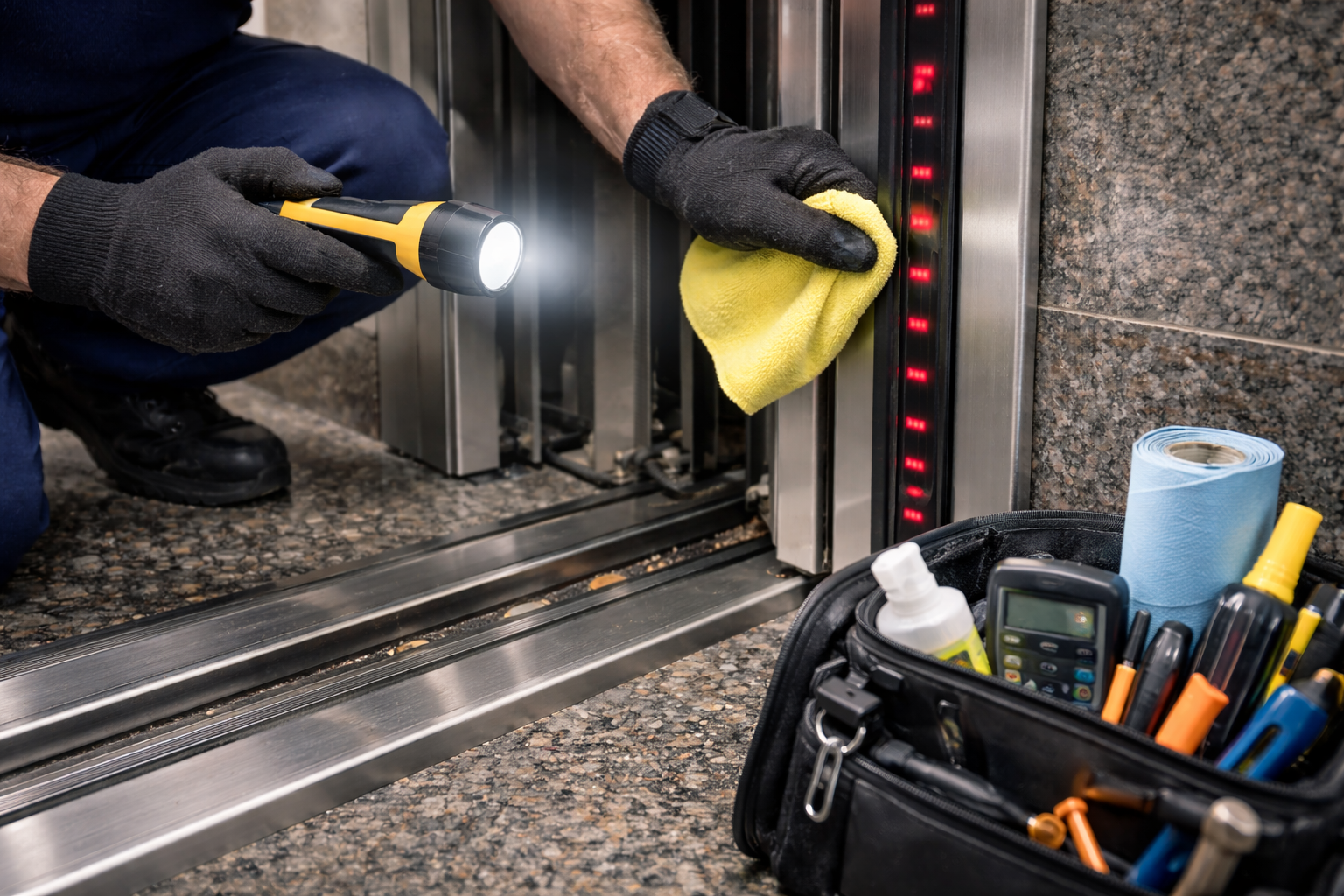
Elevator Doors: Small Components, Massive Workload
Elevator doors open and close thousands of times every year. In fact, according to the Elevator History website, elevators worldwide carry the equivalent of the Earth’s entire population every three days. With a global population in the billions, that represents an enormous number of trips—and an equally enormous number of door cycles.
Despite that workload, modern elevator doors are remarkably reliable. However, like any mechanical system that sees constant use, door components can experience wear, contamination, or minor issues over time.
The good news?
Not every door problem indicates a major failure. In many cases, performance issues such as slow-closing doors or doors that hesitate before closing are caused by environmental factors—not broken equipment.
And in some situations, there are safe, non-technical steps building staff can take to improve door operation that can be added to regular building maintenance or while waiting for a service technician.
Simple, Safe Ways to Improve Elevator Door Performance
These tips apply only to cleaning and visual inspection. They do not involve adjustments, disassembly, or bypassing safety devices.
1. Keep the Sill Plate Clean
The elevator door sill—the metal plate you step over when entering the cab—is not decorative. It is the track that the door travels on.
Small debris such as sand, grit, or pebbles can:
Slow door movement
Cause doors to hesitate or stick
Trigger nuisance faults
What to do:
Use a soft brush or vacuum to remove loose debris from the sill groove. This simple step alone resolves many slow-door complaints.
2. Watch for Sticky Residue in the Track
In high-traffic buildings—hotels, medical offices, schools—it’s common to find sugary residue in the sill track from spilled drinks.
Over time, this creates a sticky film that:
Increases friction
Attracts dirt
Interferes with smooth door travel
What to do:
Clean the sill groove with mild soapy water and a non-abrasive pad. Avoid harsh chemicals or aggressive scraping.
3. Clean the Door Safety Sensors (Light Curtains)
Most modern elevators use infrared light curtains, not single beams, to prevent doors from closing on passengers.
These sensors can be disrupted by:
Dirt or wax buildup
Residue from improper cleaning products
Paint overspray
Objects hanging or blowing into the sensor path
What to do:
Gently clean the black sensor strips on the door edge and jamb with a soft cloth. Ensure nothing is blocking the sensor path.
⚠️ Important: Scratches or damage to the sensor housing can cause false readings. Never scrape or use abrasive tools.
4. Clean the PATH
Don’t for get to clean any door mats and floors that are near the elevator entrance or on the path to the elevator. That grit and grime comes from somewhere. Unknowingly people maybe routinely tracking in the dirty that is causing the issue.
When to Call Your Elevator Service Provider
If you’re unsure what belongs in the sill track, how to clean a component, or if door problems persist after cleaning, it’s time to call your elevator maintenance provider. At Georgia Lift Solutions we will give your elevator doors and the rest of your elevator all the love and attention it deserves. That repair, when it comes to the doors maybe an easy cleaning. Remember, over the years, we’ve seen nearly everything lodged in door tracks:
Coins
Pen caps
Bottle caps
Pencils
Any one of these can prevent doors from operating properly—and none require a major repair once identified. If you are confused at all we can help.
Preventive Care Makes a Difference
Adding light cleaning of the door sills and entrances to your cleaning routine can make a difference. Just adding those itmes to your building maintenance checklist can make a big difference:
Reduce nuisance calls
Improve door reliability
Extend component life
Enhance passenger experience
At Georgia Lift Solutions, we believe well-maintained elevators start with informed building owners and maintenance teams. Knowing what’s safe to clean—and when to call a professional—helps keep your elevators running smoothly and your tenants satisfied.
If you have questions about door performance, maintenance best practices, or need professional service, our team is always ready to help.
