What the Architect Needs to Know
Elevator modernization directly affects structural, electrical, mechanical, and life-safety systems. Early coordination prevents redesigns, change orders, and delays.
1. Code Compliance Is Often the Driving Force
Modernizations are frequently triggered by updates to ASME A17.1 / CSA B44 safety codes, ADA requirements, or state/local inspection mandates. This may require:
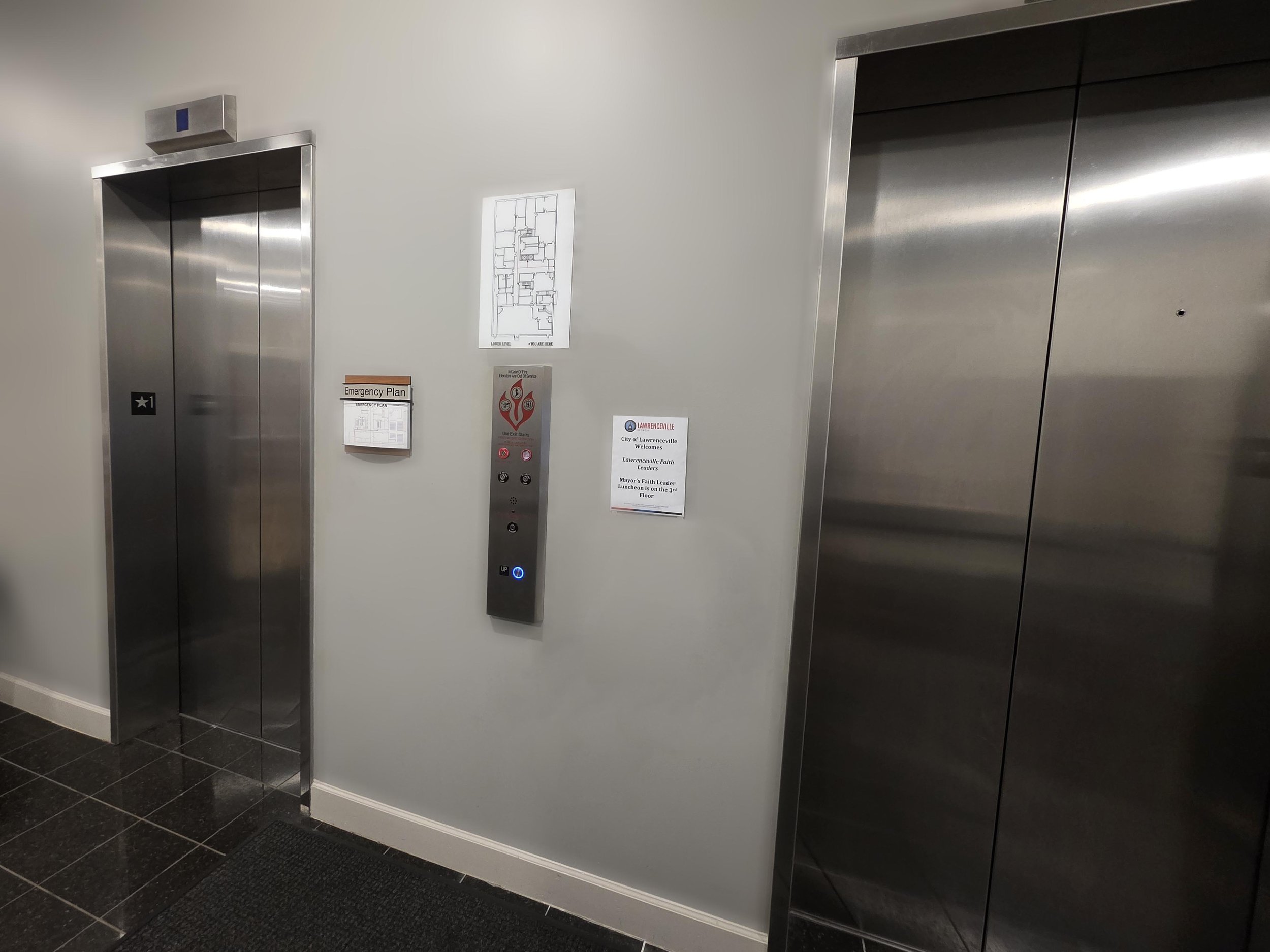
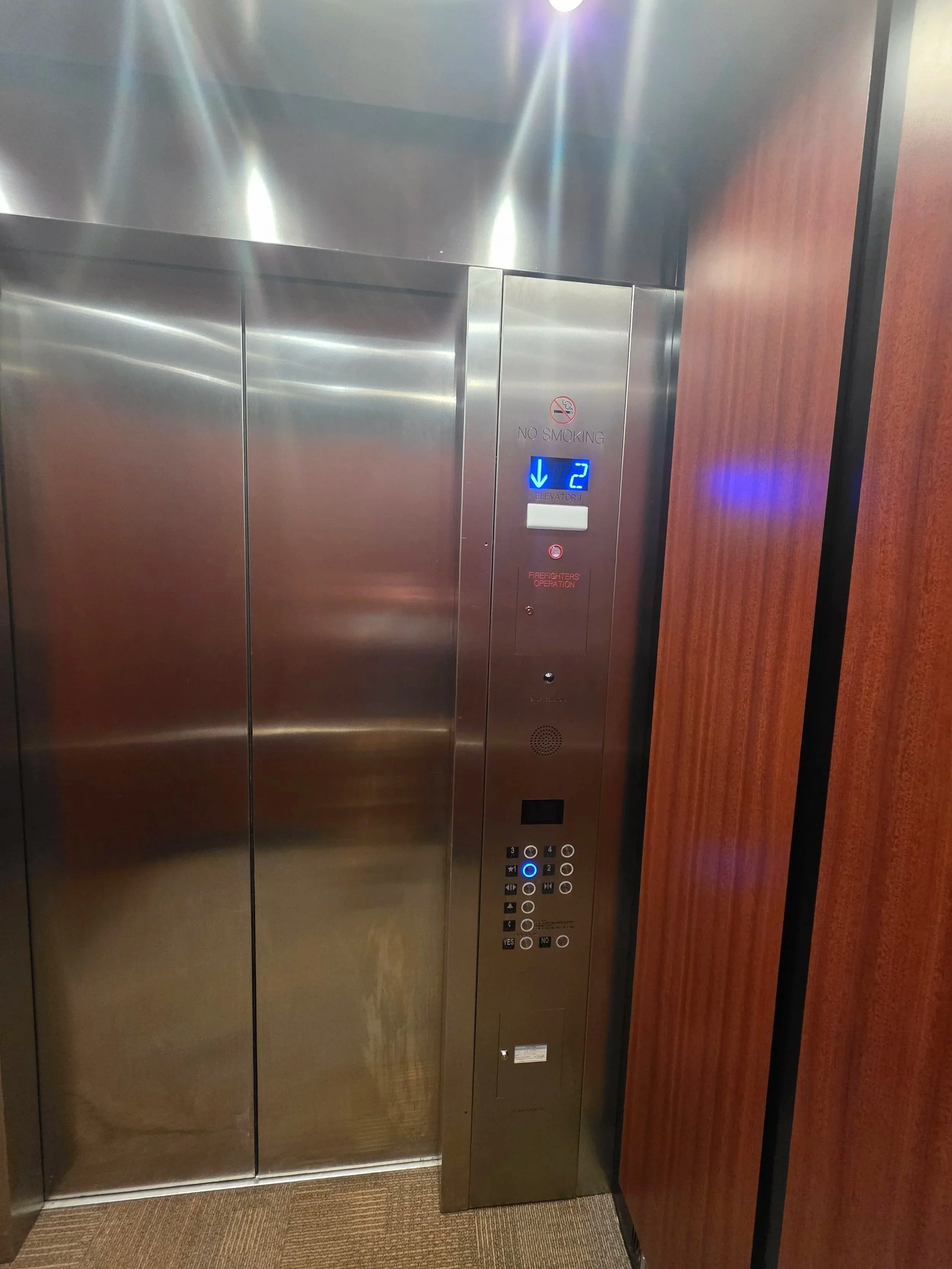
Fire service updates
Seismic compliance upgrades
Door lock monitoring systems
Machine room ventilation improvements
Emergency communication system upgrades
Emergency lowering
An architect must evaluate how these updates affect:
Shaft clearances
Pit depth and overhead
Machine room size and access
Electrical capacity
Fire alarm integration
Bringing the elevator “up to code” often has ripple effects throughout the building.
2. Structural & Space Constraints Matter
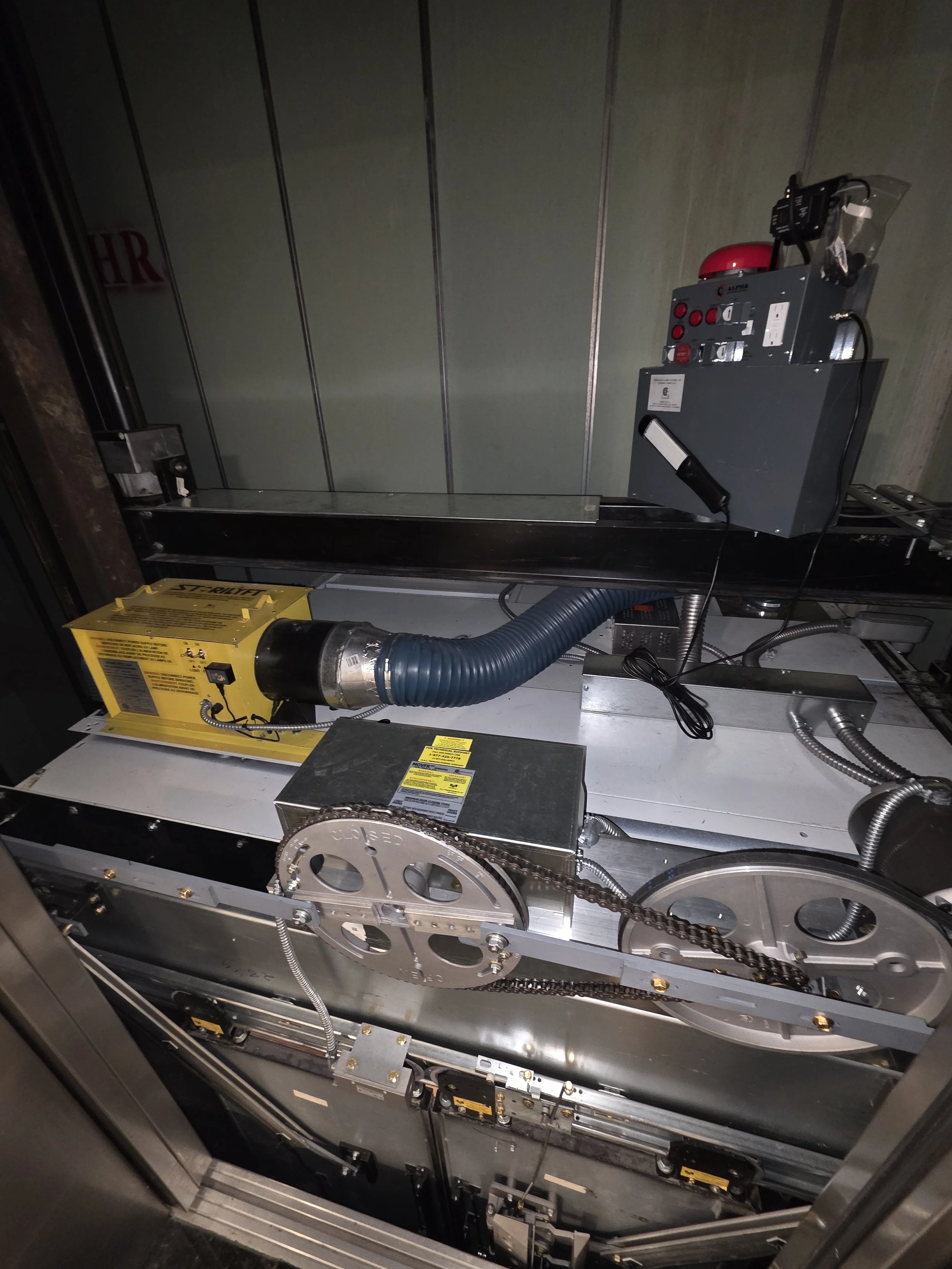
Older buildings were not designed with modern controller cabinets, drives, or door operators in mind. Space planning may require:
Wall modifications
New conduit routing
Reinforced supports
Improved machine room access
Machine roomless options
Early site surveys prevent surprises once demolition begins.
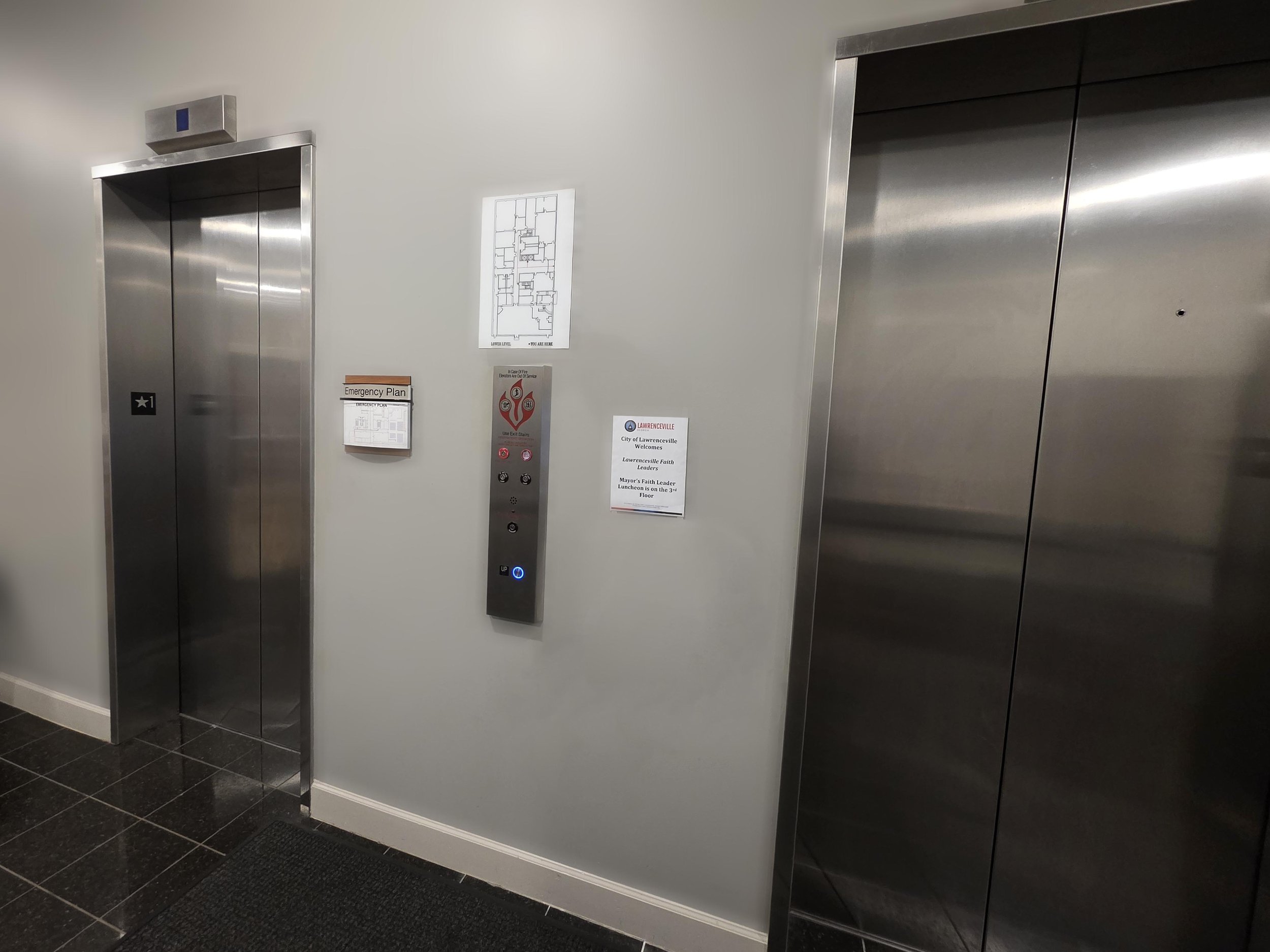
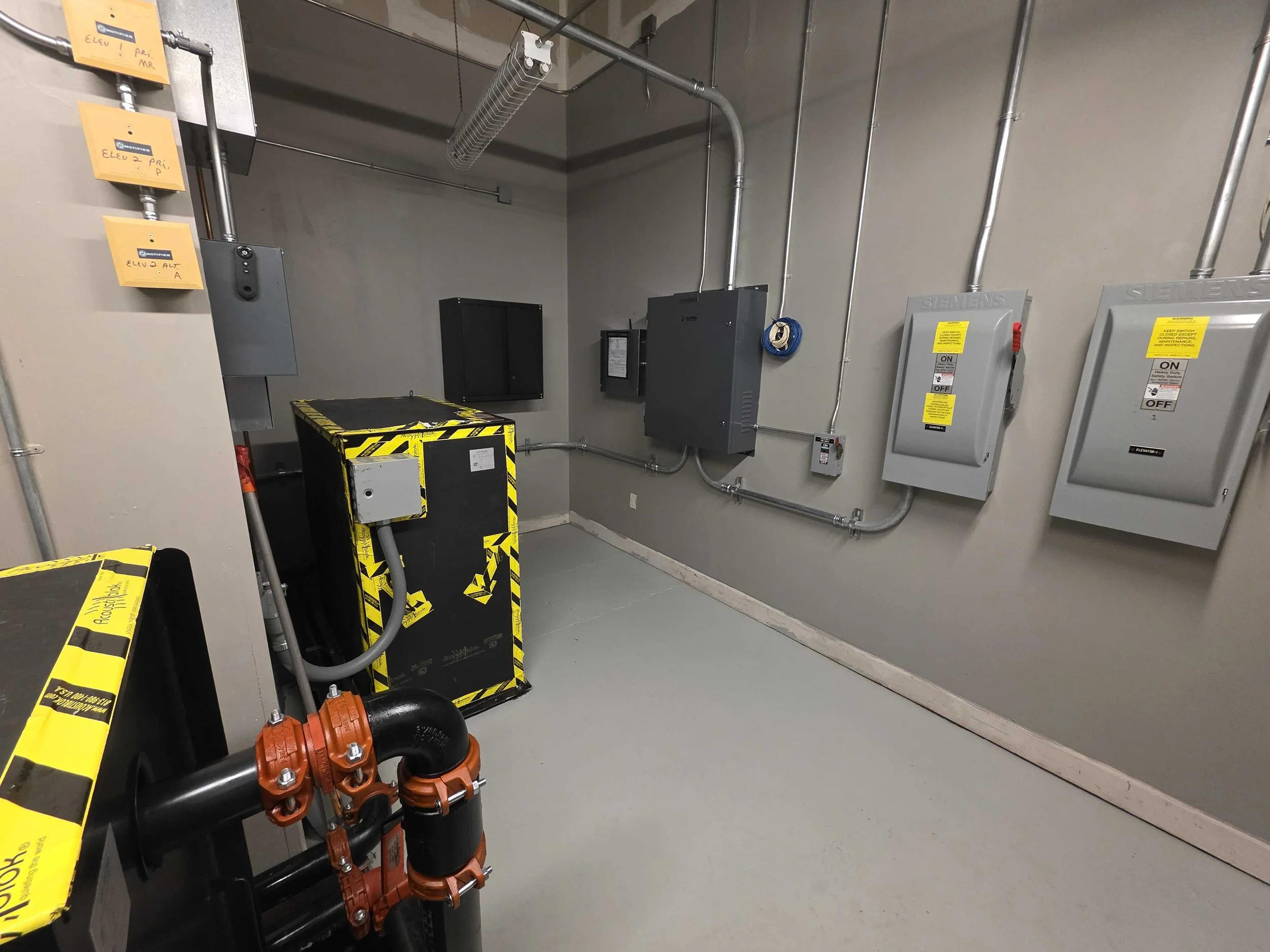
3. Electrical & Power Considerations
Modern variable frequency drives (VFDs) improve ride quality and energy efficiency but may require:
Updated feeders
Dedicated disconnects
Emergency power integration
Surge protection
Coordination with electrical engineers is critical to avoid downtime extensions.
4. Construction Phasing & Tenant Impact
Modernization can take several months per elevator. In multi-car buildings, phasing strategies must be carefully developed to maintain accessibility and life safety compliance.
Architectural planning should consider:
Temporary signage and wayfinding
ADA accessibility during outages
Construction containment areas
Noise mitigation strategies
The best projects anticipate tenant movement, not react to it.
What the Building Owner Needs to Know
Modernization affects revenue, tenant satisfaction, branding, and long-term operating costs.
1. Communication Is Everything
Tenants rely on elevators daily. Initial inconvenience may seem manageable—but extended downtime erodes patience quickly.
Owners and managers should clearly communicate:
Why the modernization is necessary (safety, reliability, compliance, efficiency)
The agreed timeline
Expected noise and dust
Access restrictions
Safety procedures
Proactive communication reduces complaints and protects tenant relationships.
2. Get a Realistic Timeline — In Writing
A reputable contractor should provide a detailed schedule outlining:
Equipment lead times
Demolition duration
Installation milestones
Inspection and testing periods
Delays beyond minor contingencies often point to incomplete site surveys or poor planning. Demand transparency.
3. Understand Your Responsibilities
Contracts typically require owners to provide:
After-hours access
Secure onsite storage
Electrical readiness
Clear access pathways
Failure to meet these obligations can extend downtime and increase costs.
4. Compare Proposals Carefully
Not all modernization bids are equal. Watch for:
Vague scope language
Missing code-required upgrades
Extremely low bids that exclude critical components
Ensure each proposal clearly lists every component being replaced—not just general descriptions like “replace jack” or “upgrade controller.”
5. Avoid Proprietary Lock-In
Proprietary systems can limit future maintenance options and inflate long-term service costs. Non-proprietary equipment provides flexibility, competitive maintenance pricing, and better lifecycle value.
Over the lifespan of the elevator, maintenance costs often exceed the modernization cost itself.
6. Protect Your Brand
Elevators are one of the most visible mechanical systems in your building. Ride quality, leveling accuracy, door timing, lighting, and interior finishes all contribute to tenant perception.
Modernization is an opportunity to improve:
Energy efficiency
Ride smoothness
Dispatch efficiency
Interior aesthetics
Accessibility
A smooth, quiet, reliable elevator enhances your building’s reputation.
The Georgia Lift Solutions Approach
At Georgia Lift Solutions, we believe modernization should:
Improve safety
Extend equipment life
Reduce long-term maintenance costs
Enhance tenant satisfaction
Protect the owner’s investment
Increase your building’s value
We provide:
Comprehensive site surveys
Transparent scopes of work
Non-proprietary solutions
Detailed timelines
Ongoing communication throughout the project
Whether you’re an architect planning a renovation or a building owner evaluating capital improvements, early collaboration prevents frustration, delays, and unexpected costs.
Planning a Modernization?
If you’re evaluating an elevator upgrade in Georgia, connect with Georgia Lift Solutions for a detailed assessment and transparent proposal.
If modernization isn’t the right fit and a full replacement is being considered, we can provide solid numbers quickly—so you can make informed decisions with confidence.
Modernization doesn’t have to be a headache. With the right planning partner, it becomes a strategic improvement to your building’s future.
